When the Shipment Stops Going to Plan: Testing the 6500X
How the SkyCell 6500X held 2-8°C for over 11 days – through a week-long airport delay, with zero infrastructure support.
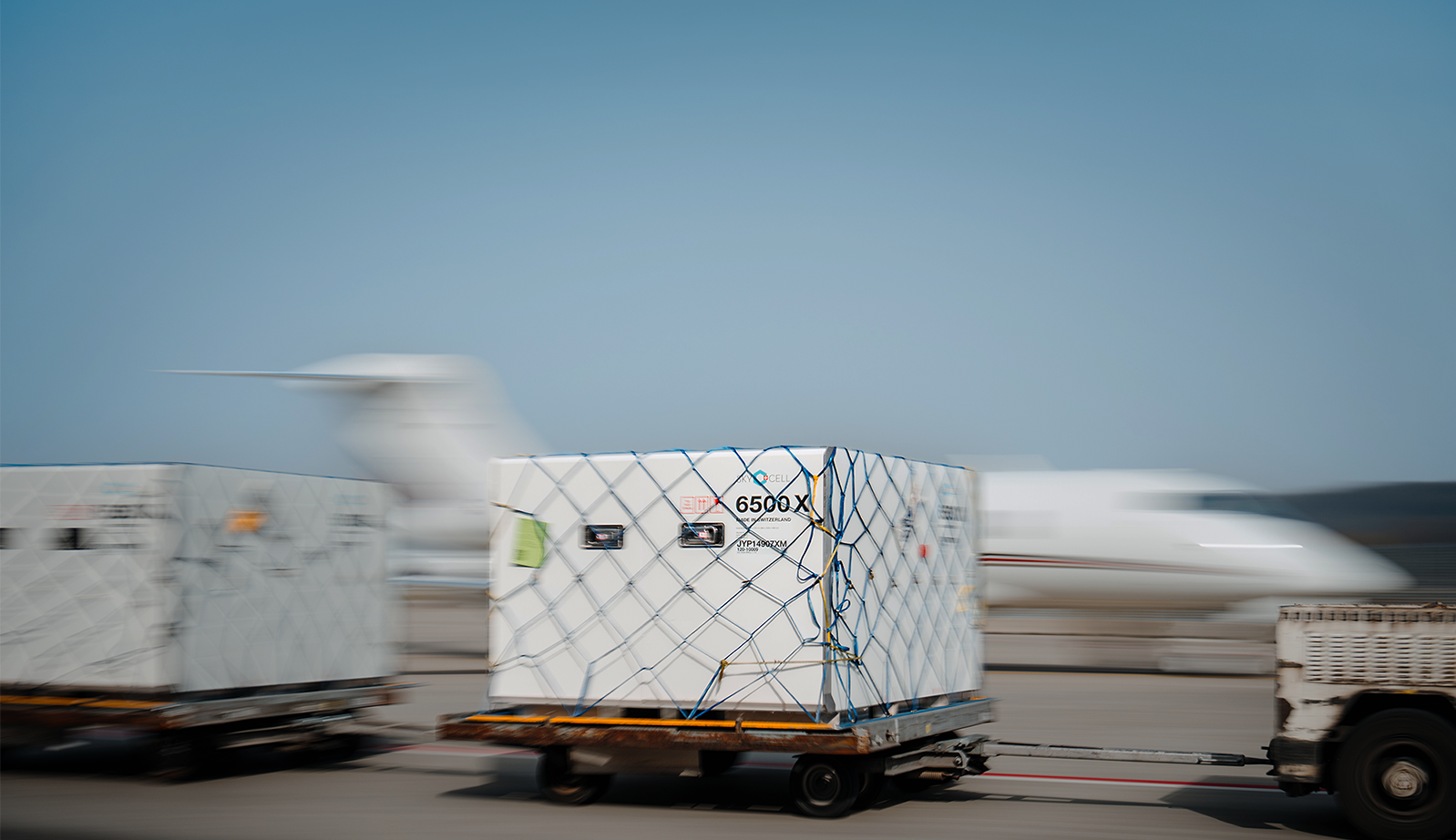
How the SkyCell 6500X held 2-8°C for over 11 days – through a week-long airport delay, with zero infrastructure support.
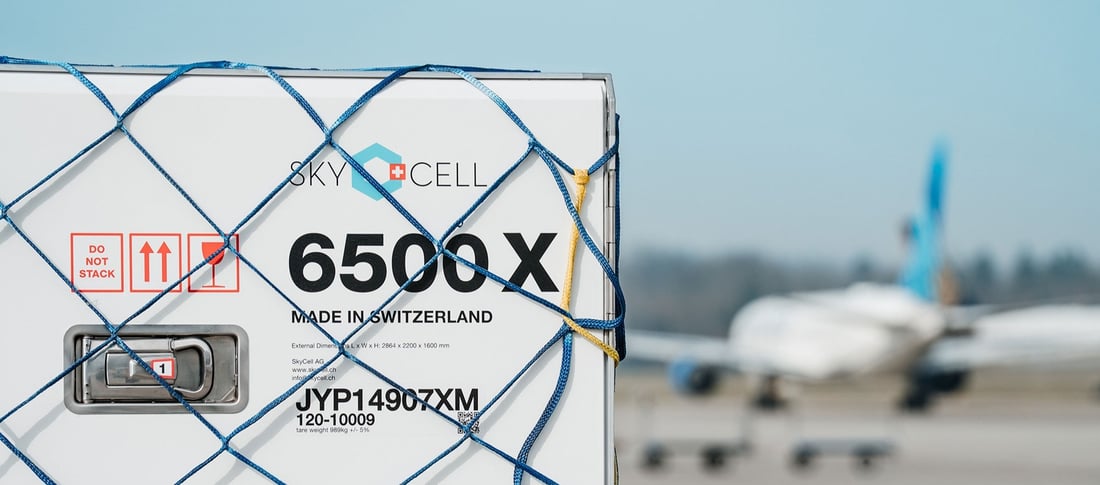
The 6500X departed Basel, Switzerland, bound for Cincinnati, Ohio. The journey lasted more than 11 days and 4 hours across road and air transport. The container was configured to simulate strict pharmaceutical shipping conditions within a 2-8°C temperature range.
The route included:
To test infrastructure independence, the shipment operated without:
Throughout the shipment, the container remained fully autonomous.
The shipment shows the 6500X's operational flexibility: it can handle large-volume pharmaceutical transport by road and air, and it supports future multimodal ocean transitions without changing containers or relying on infrastructure support.
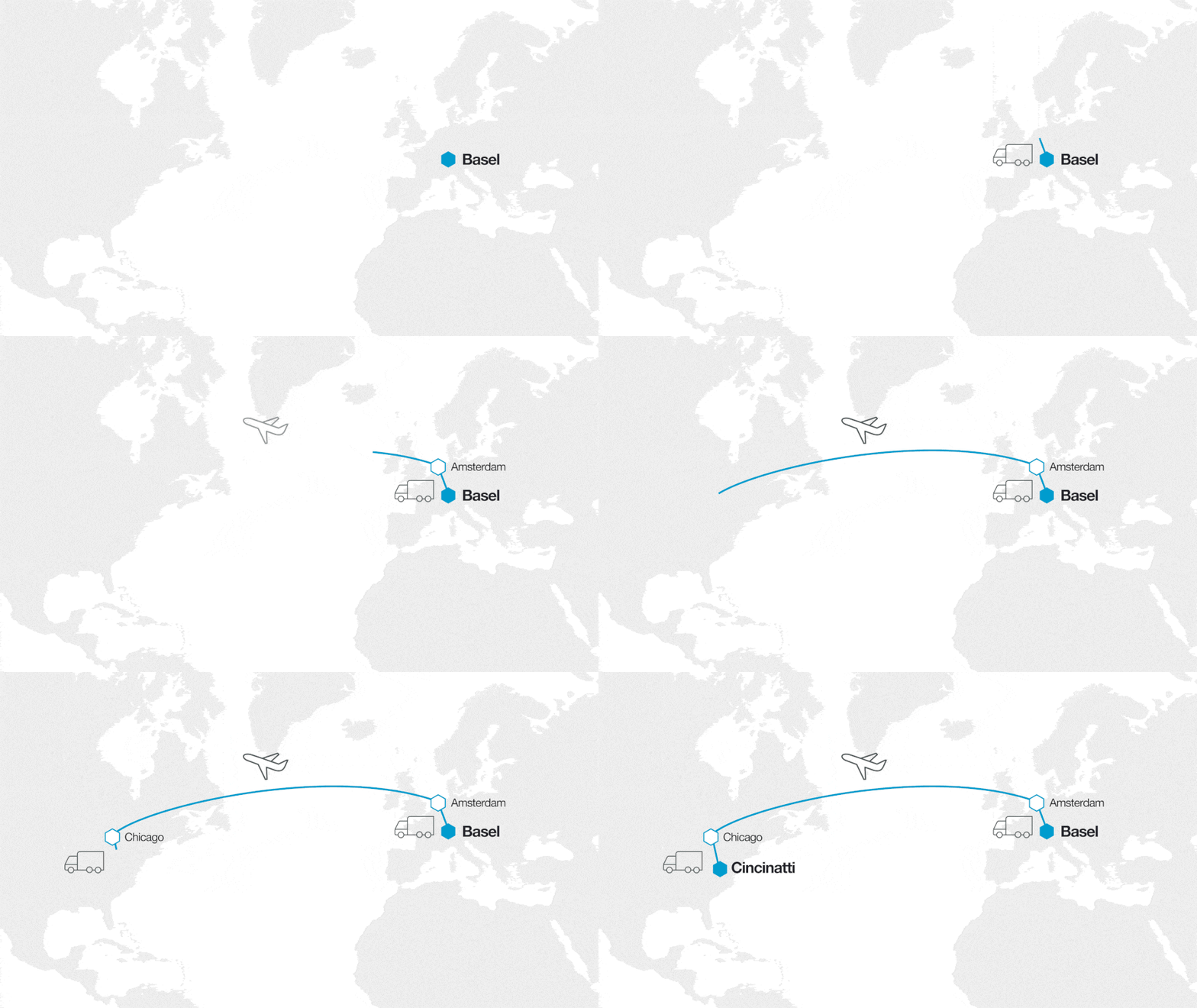
After arriving in Chicago, the shipment did not continue to its final destination as scheduled. Instead, the container remained at the airport for seven days waiting for pickup, at an ambient temperature of 19-20 °C.
While this delay was intentionally planned as part of the validation, it reflects a real operational challenge in global pharmaceutical logistics. Extended waiting can quickly create infrastructure dependencies, requiring cold storage access, external power, or manual intervention to maintain protection.
Traditional containers typically rely on this type of infrastructure support during prolonged delays, limiting flexibility when shipments deviate from plan.
The 6500X did not.
Throughout the full journey, ambient external temperatures fluctuated between 2.7°C and 35.6°C across truck transport, airport handling areas, warehouse environments, and flight operations.
Despite these external variations and the one-week airport hold at an ambient temperature of 19-20 °C, internal temperatures remained stable within the required 2-8°C range across every leg of the shipment.
No intervention was required at any stage.
With 300 hours of independent runtime, the container maintained stable pharmaceutical conditions throughout the shipment, without external power, cold storage, or operational intervention, enabling greater flexibility across multimodal transport and disruption conditions.
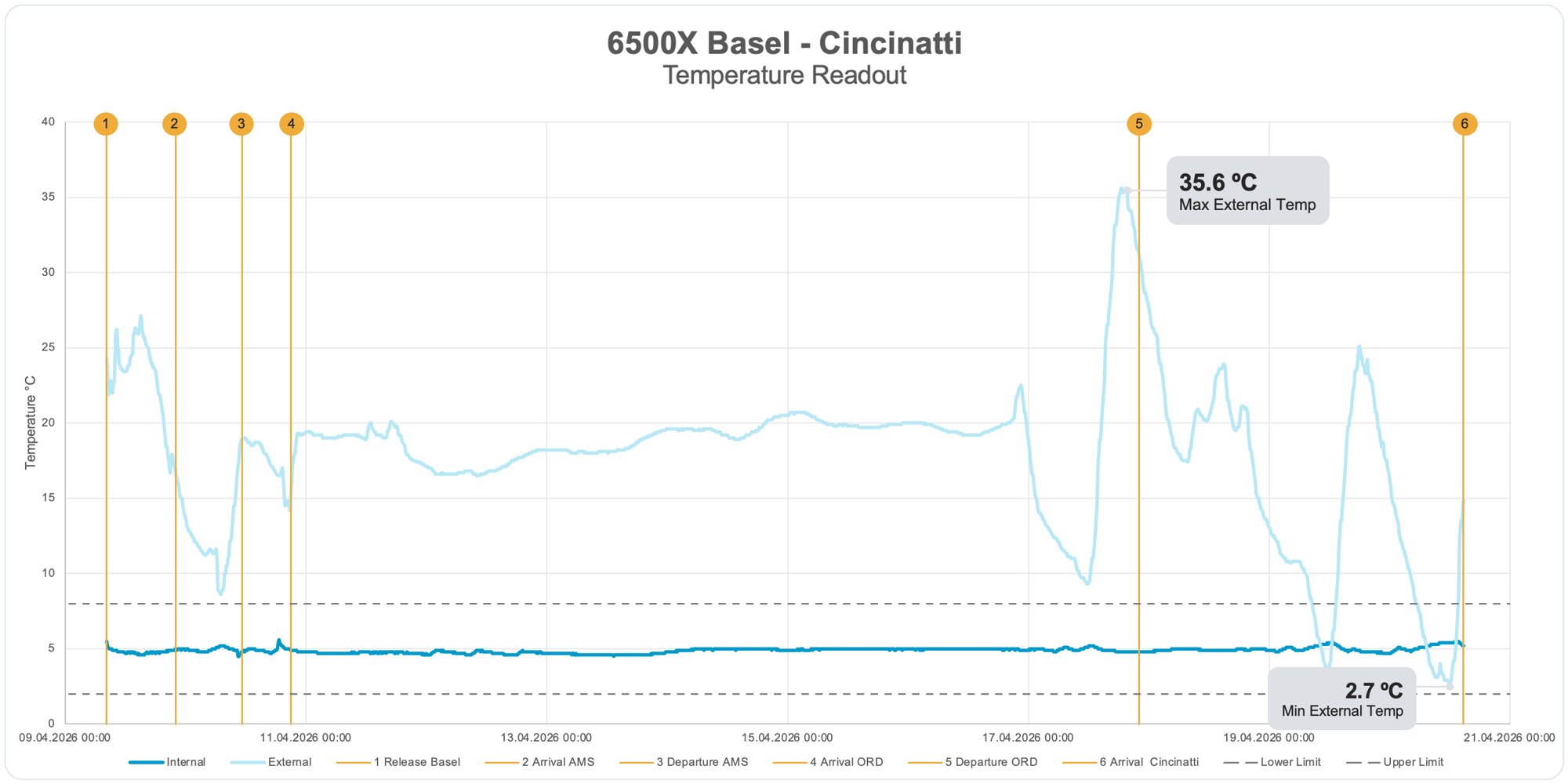
Real-time monitoring through Validaide provided continuous visibility throughout the shipment, confirming stable internal conditions across each handover and waiting period.
The result was uninterrupted pharmaceutical-grade protection across more than 11 days and 4 hours of multimodal transport and disruption conditions, delivered autonomously by the container itself.
11 days, 4 hours
Total shipment duration
7 days
Airport delay
2-8°C
Temperature range maintained
2.7°C to 35.6°C
External temperatures
None
Infrastructure support used
None
Operational interventions required
This shipment was designed to validate more than runtime performance. It demonstrated what happens when protection remains with the container itself, rather than relying on infrastructure availability.
The result is more than temperature stability. It enables pharmaceutical teams to operate with greater flexibility, reduce infrastructure dependency, and move shipments across road, air, and ocean in the same container, without redesigning routes around infrastructure limitations, handovers, or contingency planning.
Even when the route stops behaving as planned, protection should not. That is what Protection Beyond Limits looks like in practice. Read more about the 6500X features and capabilities on the dedicated page.
Reach out to our team using the form below—we'd love to hear from you.